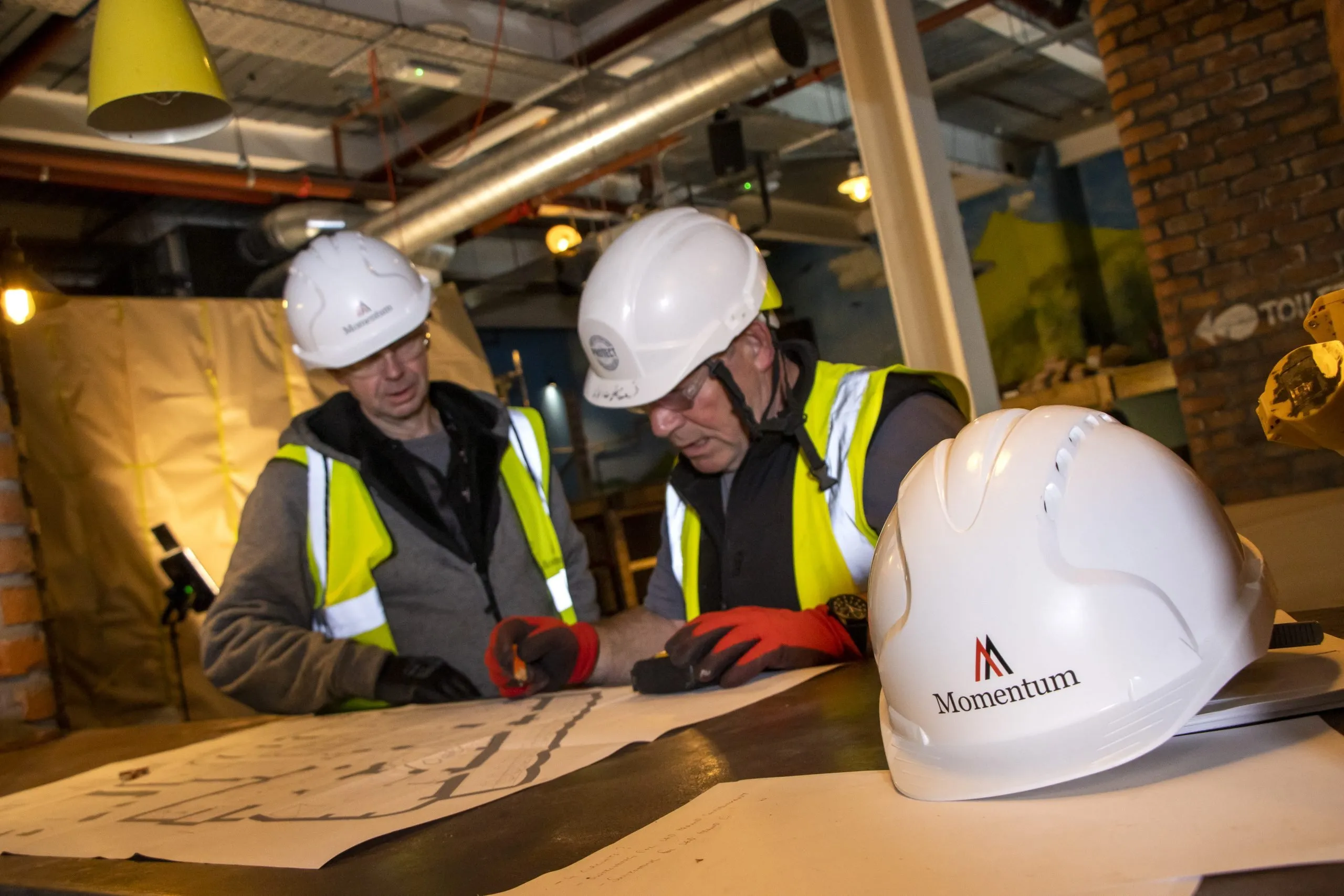
How the Building Safety Act is rewriting approaches to fire safety: Our Construction Director, Dan Lewis shares his thoughts on what it means for the industry and lessons learnt from fire remediation work carried out by Momentum Build.
How the New Building Safety Act is Rewriting Approaches to Fire Safety
The Building Safety Act 2022 has undoubtedly transformed the construction and property sectors, placing greater accountability on developers, consultants, and contractors to demonstrate that buildings are safe throughout their lifecycle. While the legislation is often discussed in broad terms, its most significant contribution may be the spotlight it has shone on the condition of existing buildings and the industry’s historic approach to fire safety, bringing renewed focus to building condition, compliance, and risk management.
At The Momentum Group, we are currently working across several fire remediation and compliance projects, many involving residential or commercial buildings that were completed under previous regulations. However, the issues that are being uncovered are raising important questions that extend beyond compliance. They are often linked to fundamental shortcomings in design, quality assurance, and the oversight of construction.
Across our tenders, several recurring issues continue to emerge. These include non-compliant fire doors and apartment entrance doors, inadequate fire stopping around compartment walls and service penetrations, and breaches in compartmentation that can compromise a building’s fire strategy. In some cases, fire strategy reports do not align with the building as constructed, creating uncertainty and further challenges when assessing compliance and determining the scope of needed works. These issues show that they are not isolated anomalies, but symptoms of wider industry challenges that accumulated over several years.
The Building Safety Act has forced organisations to take a closer look at their assets, and we welcome this increased scrutiny. Since the introduction of the new regime, clients are increasingly commissioning specialist consultant teams and surveyors to better understand the condition of their assets and identify any compliance gaps before remediation strategies can be developed.
Once issues have been identified, remediation projects are typically procured through a two-stage design and build process, often supported by a pre-construction services agreement (PCSA). Design teams, including architects, structural engineers, M&E consultants and fire specialists, work collaboratively to develop a coordinated solution before works are packaged and delivered on site. The process also requires close engagement with regulators, building control bodies, and other stakeholders to ensure compliance throughout delivery.
However, the greatest challenge is often not the remediation itself, but delivering it within occupied buildings. Many remain fully operational while works are undertaken, requiring careful planning and communication with occupiers, be they residents or businesses. Tenant liaison has therefore become a critical part of successful project delivery. By coordinating access, providing clear communication and supporting temporary relocations where necessary, liaison teams establish trust and confidence, helping residents understand why works are necessary to the long-term safety of the building. It helps minimise disruption while enabling essential safety improvements to proceed efficiently.
A further challenge is the additional regulatory oversight now required for high-rise buildings. Under the new Act, residential buildings that are at least 18 metres high or seven storeys or moreare subject to enhanced regulatory controls, including Building Safety Regulator approval before certain works can proceed. While these measures are designed to improve safety outcomes, they have introduced additional complexity into project planning and delivery, making early engagement and robust design development more important than ever. It is now an ongoing responsibility that must be evidenced throughout the entire building’s lifecycle.
I think the most important lesson emerging here is that fire safety can no longer be viewed as a compliance exercise undertaken at the end of a project. It must be considered from the outset and embedded throughout the design, construction and operational phases of a building. For too long, the question has been about whether a building meets the minimum requirements for regulation, whereas it should be whether it genuinely provides a level of protection to the residents whooccupy it. The remediation projects now being delivered across the UK demonstrate the consequences of that. Looking ahead, the industry must continue to adapt to a new era of accountability and look to achieve the highest possible standards of building performance and resident protection.
By combining technical expertise, early collaboration, and a proactive approach to risk management, the sector can deliver safer buildings and greater confidence for residents, clients and stakeholders.